Why Do You Add 17 Yards to a Field Goal?
The football is on the 30-yard line. The announcer says it\'s a 47- or 48-yard field goal. Where did those extra yards come from?
You're watching a football game.
The offense has reached the opponent's 30-yard line.
The announcer says, "They're lining up for a 47-yard field goal."
Wait.
Forty-seven?
The ball is on the THIRTY.
Did we miss something?
Nope.
You've just encountered one of those football details everybody seems to know except the people who are actually trying to learn.
Let's fix that.
The Field Goal Is Longer Than the Yard Line
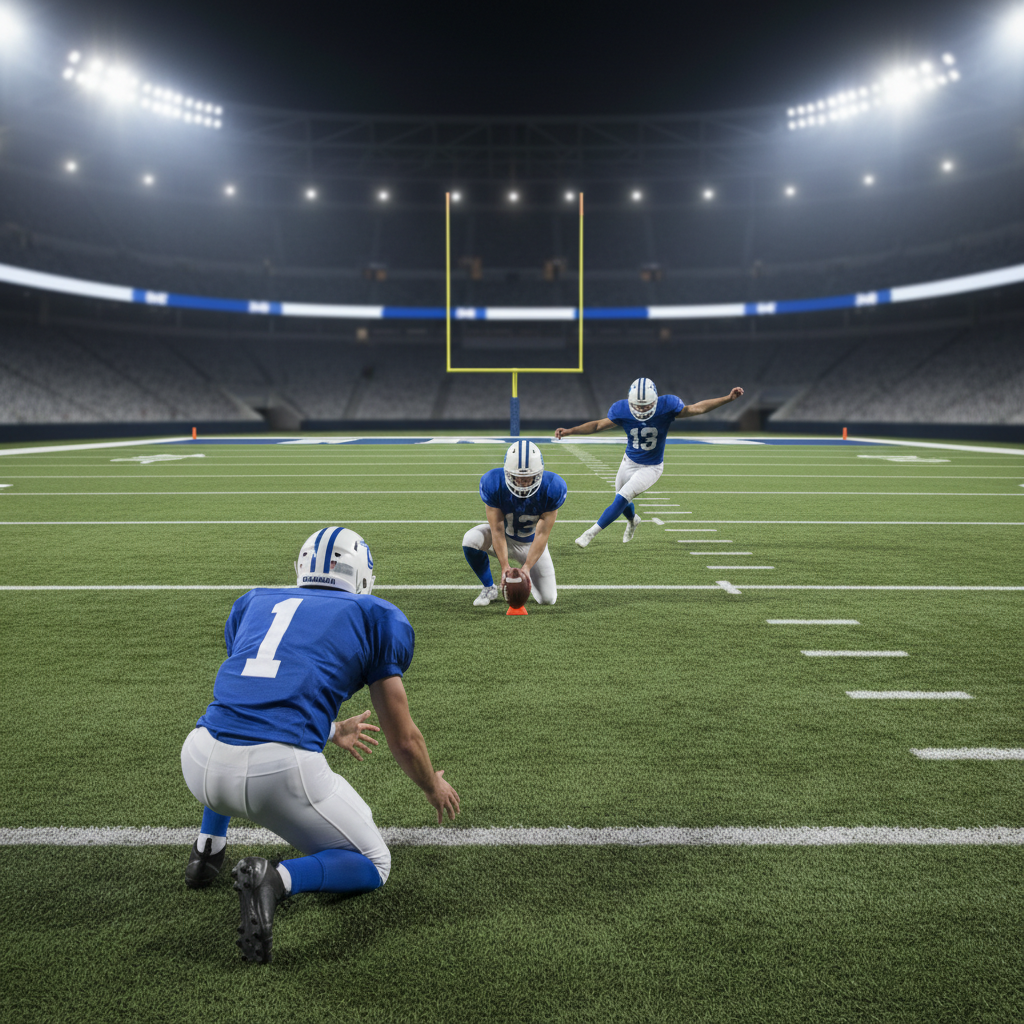
When a team attempts a field goal, the kicker doesn't kick the ball from the line of scrimmage.
The ball is snapped backward to a holder, who places it on the ground for the kicker.
And the goalposts aren't positioned on the goal line.
They're at the back of the end zone.
Those two details explain the extra distance.
Where Do the Extra Yards Come From?
Start with the end zone.
An NFL end zone is 10 yards deep.
The goalposts stand at the back of that end zone.
So if the football is on the opponent's 30-yard line, that's 30 yards to the goal line PLUS 10 more yards to the goalposts.
We're already at 40 yards.
Now account for the holder.
The holder typically sets up approximately seven to eight yards behind the line of scrimmage.
That adds another seven or eight yards.
So a kick snapped from the opponent's 30-yard line is approximately:
30 + 10 + 7 = 47 yards.
Or, with an eight-yard hold:
30 + 10 + 8 = 48 yards.
That's where the famous "add 17 yards" shortcut comes from.
Is It Always Exactly 17 Yards?
No—and this is worth understanding.
Seventeen yards is a traditional quick estimate based on a seven-yard hold.
The actual reported distance depends on where the football is kicked from.
Some holders position themselves eight yards or more behind the line.
So adding 17 is useful for understanding the concept, but it's not an absolute rule for every NFL kick.
A Few Easy Examples
With a seven-yard hold:
- Ball at opponent's 20: approximately a 37-yard attempt.
- Ball at opponent's 30: approximately a 47-yard attempt.
- Ball at opponent's 40: approximately a 57-yard attempt.
With an eight-yard hold, each attempt is one yard longer.
Now you know why the number on the field doesn't match the number on your television.
Why Does Field Goal Distance Matter?
Longer kicks generally present more difficulty.
The kicker needs sufficient distance and accuracy.
Wind, weather, footing, and defensive pressure can all matter.
That's why coaches sometimes make very different decisions depending on where the ball is spotted.
On fourth down, they may attempt a field goal, punt, or keep the offense on the field.
What seems like a small difference in field position can change that decision.
The Next Time Someone Announces a 50-Yard Field Goal
Look at the ball.
Estimate how far it is from the goal line.
Add the depth of the end zone and the distance back to the holder.
And suddenly the announcement won't sound like someone invented an extra 17 yards out of nowhere.
Stephanie's takeaway: The yard marker tells you where the play starts. Field-goal distance is measured from where the ball is actually kicked to the goalposts.
Explore Topics
Written by
Stephanie Pedley
Football educator and content creator helping beginners understand and love the game.