Fantasy Football 101: What It Is and How to Play
Everyone at work is talking about their fantasy team and you have no idea what they mean. Here's your beginner's guide to fantasy football — what it is, how it works, and whether you should play.
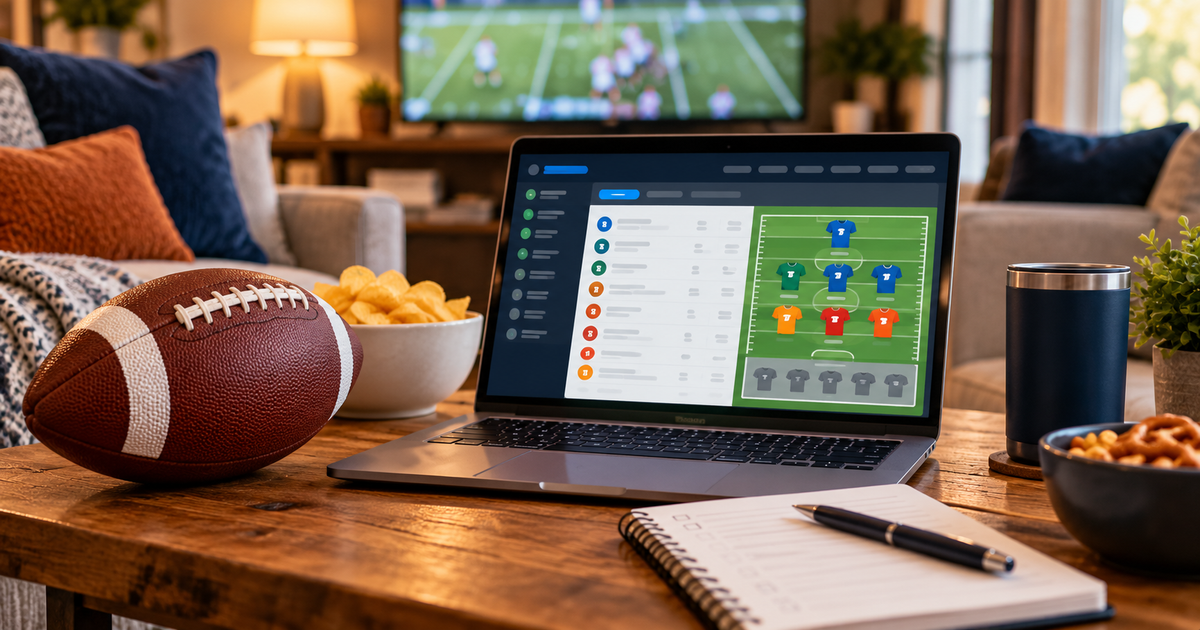
Every September, something happens in offices, group chats, and family dinners across America. People start talking about "their team" — but not the team they actually root for. They're talking about their fantasy team.
If you've ever nodded along while having absolutely no idea what anyone was saying, this one's for you.
So What Actually Is Fantasy Football?
Fantasy football is a game where you build a pretend team made up of real NFL players. Your players earn you points based on how they actually perform in real games that week.
If your running back rushes for 100 yards on Sunday, you get points. If your quarterback throws three touchdowns, you get points. If your players have a bad week — you don't get many points.
At the end of each week, your total points are compared against another person in your league. Whoever has more points wins that matchup.
It's basically a season-long competition where you're managing a roster of real players and hoping they perform well every Sunday.
How Does a Fantasy League Work?
Most fantasy leagues have 8–12 people — friends, coworkers, family members, or strangers online. Here's the basic structure:
The Draft
Before the season starts, everyone in the league takes turns picking real NFL players for their roster. This is called the draft. You might pick a star quarterback in the first round, a top running back in the second, and so on until everyone has a full team.
The draft is a big deal. People prepare for weeks. There are entire websites, podcasts, and apps dedicated to helping you draft well.
The Regular Season
Each week, you set your lineup — choosing which players to "start" (they score points for you) and which to "bench" (they don't). You're matched up against one other person in your league, and whoever's players score more points that week wins.
The Playoffs
Near the end of the NFL regular season, the top teams in your fantasy league make the playoffs. Win your fantasy playoff bracket and you're the league champion.
The Prize
Most leagues have some kind of stakes — bragging rights, a trophy, or a cash pot that everyone chips in to at the start of the season. The winner takes it all.
What Positions Do You Need?
A typical fantasy lineup looks something like this:
- 1 Quarterback (QB) — usually the highest scorer; touchdowns and passing yards earn big points
- 2 Running Backs (RB) — earn points for rushing yards and touchdowns
- 2–3 Wide Receivers (WR) — earn points for receiving yards and touchdowns
- 1 Tight End (TE) — like a wide receiver but usually scores fewer points
- 1 Kicker (K) — earns points for field goals and extra points
- 1 Defense/Special Teams (D/ST) — your whole team's defense as one unit; earns points for sacks, interceptions, and shutouts
- 1–2 Flex spots — can be filled by a RB, WR, or TE
Every week you decide who starts and who sits on your bench based on matchups, injuries, and your gut feeling.
Not sure what these positions actually do on the field? Football Positions Explained for Total Beginners has you covered.
How Do You Score Points? PPR vs. Standard Scoring
Every platform is a little different, but here's a typical scoring system:
| What Happens | Points |
|---|---|
| Passing touchdown | 4 points |
| Every 25 passing yards | 1 point |
| Rushing or receiving touchdown | 6 points |
| Every 10 rushing/receiving yards | 1 point |
| Field goal (50+ yards) | 5 points |
| Interception thrown | -2 points |
| Fumble lost | -2 points |
So if your quarterback throws for 300 yards and 2 touchdowns in a real game, he might score you 20+ fantasy points. That's a great week.
PPR vs. Standard: What's the Difference?
One of the first things you'll hear in any fantasy league is "is this PPR or standard?" Here's what that means.
Standard scoring uses the table above. Players earn points for yards and touchdowns only.
PPR (Points Per Reception) adds 1 extra point every time a player catches a pass — regardless of how many yards they gain. So a running back who catches 8 short passes in a game gets 8 bonus points in PPR that he wouldn't get in standard.
Why does it matter? PPR makes players who catch a lot of short passes (slot receivers, pass-catching running backs) much more valuable. In standard scoring, a wide receiver who catches 5 passes for 50 yards scores 5 points. In PPR, that same performance scores 10 points.
Half-PPR (0.5 points per reception) is a popular middle ground — it rewards pass-catchers without making them as dominant as full PPR.
When you join a league, check which format it uses before your draft. It changes which players you should prioritize.
What Do I Do After My Fantasy Football Draft?
The draft is exciting, but it's just the beginning. Here's what actually happens once the season starts.
Set Your Lineup Every Week
Before each week's games, you need to decide which players to start and which to bench. Most platforms lock lineups at kickoff on Sunday (or Thursday for Thursday Night Football games). Don't forget to set your lineup — leaving an injured player in your starting spot is one of the most common beginner mistakes.
Check the Injury Report
NFL teams release injury reports throughout the week. A player listed as "Questionable" might play — or might not. A player listed as "Out" is definitely not playing and should not be in your starting lineup. Most fantasy platforms flag injured players automatically, but it's worth checking before Sunday.
Work the Waiver Wire
After the draft, not every good player will be on a roster. The waiver wire is the pool of players who weren't drafted and are available to pick up. Every week, players get dropped and added — and sometimes a backup becomes a starter due to injury, turning a waiver wire pickup into a league winner.
How waivers work varies by league: some use a priority order (lower-ranked teams get first pick), others use a bidding system with a fake currency called FAAB (Free Agent Acquisition Budget). Your platform will explain the rules for your specific league.
Understand Bye Weeks
Every NFL team has one week off during the season — called a bye week. When your star player's team has their bye, that player doesn't play and scores zero fantasy points. You need to start someone else in their place.
Check your players' bye weeks before the season and make sure you have backup options at key positions. Running out of starters during bye week is a very fixable problem — if you plan ahead.
Make Start/Sit Decisions
Every week you'll face choices: do you start your reliable but slightly injured running back, or the backup who has a great matchup this week? These start/sit decisions are the heart of weekly fantasy management.
A few things to consider:
- Matchup — Is your player going against a weak defense or a strong one?
- Injury status — Is your player fully healthy?
- Home vs. away — Some players perform better at home
- Weather — Heavy rain or wind can hurt passing games
You won't always get it right. Nobody does. That's part of the game.
Your First-Week Checklist
Before your first week of games, run through this:
- Set your starting lineup — don't leave any empty spots or injured players in
- Check the injury report — confirm your starters are active
- Look at your bye weeks — know when your key players are off
- Browse the waiver wire — see who's available if you need a backup
- Check your matchup — know who you're playing against this week
- Download your platform's app — so you can make last-minute changes on Sunday morning
That's it. You're ready.
Where Do People Play?
The most popular platforms are:
- ESPN Fantasy — free, easy to use, great for beginners
- Yahoo Fantasy — also free, very popular
- Sleeper — newer, app-based, popular with younger players
- NFL.com — the official NFL fantasy platform
All of them are free to use. The money (if any) comes from your league's buy-in, not the platform.
Should You Play Fantasy Football?
Here's the honest answer: it depends on what you want to get out of it.
Fantasy football is great if you want to:
- Have a reason to care about more than one team
- Get more invested in watching games
- Have something to talk about with coworkers or friends
- Learn the game faster (you'll start paying attention to players and stats you'd otherwise ignore)
Fantasy football might not be for you if:
- You're still learning the basics of football and don't want to add complexity yet
- You don't want the stress of checking injury reports and waiver wires every week
- You'd rather just enjoy watching games without it feeling like homework
There's no wrong answer. Plenty of people love football and never play fantasy. Plenty of people who barely understood football got into it through fantasy and ended up loving the sport.
If you're still getting comfortable with the basics of how football actually works, start with How Does Football Work? A Beginner's Guide before diving into fantasy.
One Thing Fantasy Football Will Definitely Do
Whether you win or lose, fantasy football will make you pay attention to players you'd never notice otherwise.
You'll suddenly care deeply about a running back on a team you've never watched. You'll check the injury report on a Thursday night. You'll watch the fourth quarter of a game you have zero emotional investment in because your tight end needs 12 more yards to win your matchup.
It makes every game matter. And for a lot of people, that's exactly the point.
Frequently Asked Questions
What is fantasy football, exactly? Fantasy football is a game where you draft a team of real NFL players and earn points based on their real-game performance. Each week, your total points are compared against another person in your league. The player with more points wins that week's matchup.
How does PPR scoring work in fantasy football? PPR stands for Points Per Reception. In a PPR league, players earn 1 extra point every time they catch a pass. This makes pass-catching players — like slot receivers and receiving running backs — more valuable than they are in standard scoring leagues.
What is a waiver wire in fantasy football? The waiver wire is the pool of players who weren't drafted and are available to add to your team. You can drop a player from your roster and pick up a waiver wire player to replace them. It's how you replace injured players and find breakout performers mid-season.
What is a bye week in fantasy football? Every NFL team has one week off during the season. When your player's team is on bye, that player doesn't play and scores zero fantasy points. You need to start a different player that week. Check your players' bye weeks before the season so you're not caught off guard.
What does "start/sit" mean in fantasy football? Start/sit decisions are the weekly choices about which players to put in your active lineup (start) and which to leave on the bench (sit). You want to start players with favorable matchups, good health, and strong recent performance.
How do I know which players to draft? Most fantasy platforms provide rankings and projections before the draft. For beginners, following the platform's default rankings is a perfectly reasonable strategy. Focus on running backs and wide receivers in the early rounds — they score the most points most consistently.
Do I need to know football to play fantasy? Not deeply, but it helps. Understanding what positions do and how scoring works makes your decisions easier. If you want to build that foundation first, the Free 5-Day Football Course is a great place to start.
New to football altogether? Start with the Free 5-Day Football Course — it'll give you the foundation you need before diving into fantasy. Or browse more Football 101 explainers. And if you want to watch a real game with someone explaining every play live, check out Stephanie's free watch-alongs.
Explore Topics
Written by
Stephanie Pedley
Football educator and content creator helping beginners understand and love the game.